
Speed of Sound in Grain Direction
As moisture content rises, propagation speed generally decreases.
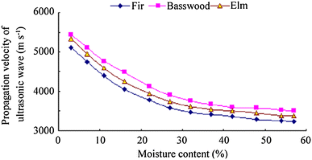
Trend: moisture increase -> lower sound velocity
Research visuals used in de/Humi materials to explain velocity, damping and stiffness behavior under changing moisture.
As moisture content rises, propagation speed generally decreases.
Trend: moisture increase -> lower sound velocity
Damping tends to rise with moisture, reducing transient sharpness.
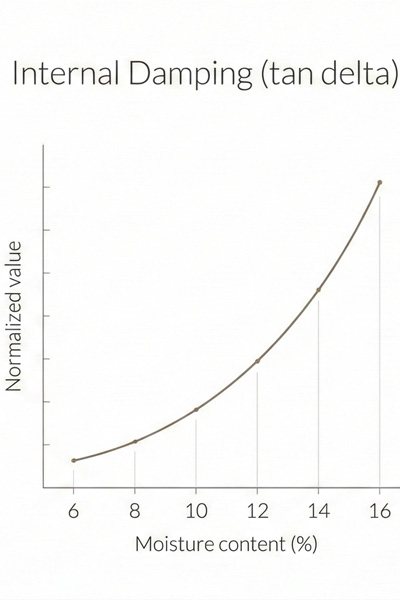
Trend: moisture increase -> higher damping
Higher moisture usually lowers stiffness and shifts response.
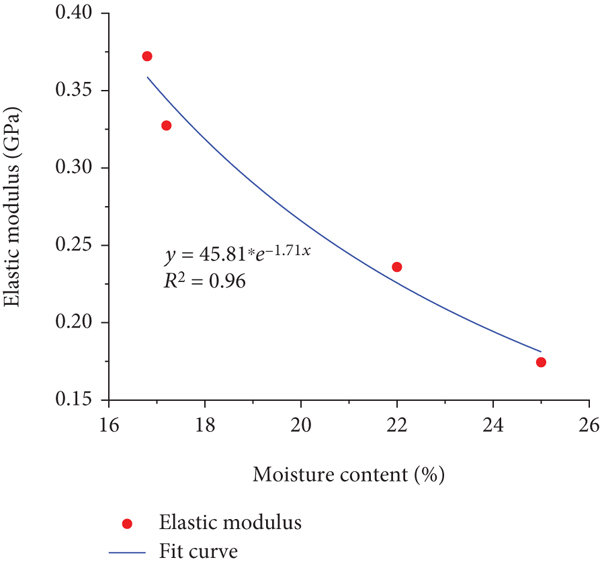
Trend: moisture increase -> lower stiffness
Material science behind humidity, wood moisture and tonal behavior.
de/Humi is engineered for practical luthier conditions where dimensional stability and predictable acoustic response matter.
Wood is hygroscopic. As moisture changes, key physical and acoustic parameters also change:
These effects can influence attack clarity, transient response, sustain and projection.
Many workshops build and service instruments around mid-40s RH for dimensional neutrality. de/Humi is tuned for that practical working zone while operating in a safe range.